Your recipe could be here…please contact us!
News
Farm Update
October 15, 2026
The stand is open, but the season is winding down. It’s time to stock up on all the winter squashes and pumpkins. Get the garlic you’ll need to get through the rest of the year. For a live view of the stand, go here.
- Sweet potatoes — Yum!
- Okra
- Hot peppers
- Sweet peppers
- Tromboncino winter squash
- Butternut squash
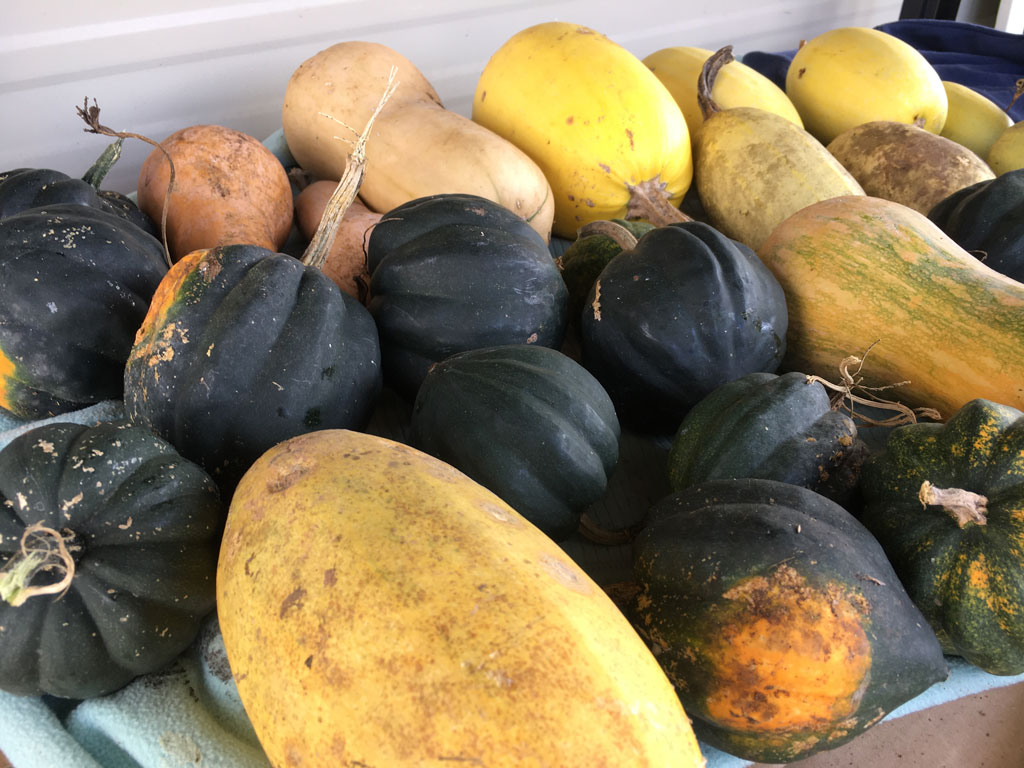
- Acorn squash
- Illinois white crookneck squash — great for pie making!
- Hard neck garlic
- Luffa
Don’t forget to check out our YouTube channel (@TrippyAcres) to follow along as we grow our garden and build our homestead and our geodesic dome house…there is a lot going on over here!
Hope to see you at the stand, and as always, just keep growing!
High Tunnel Fun
January 18, 2023
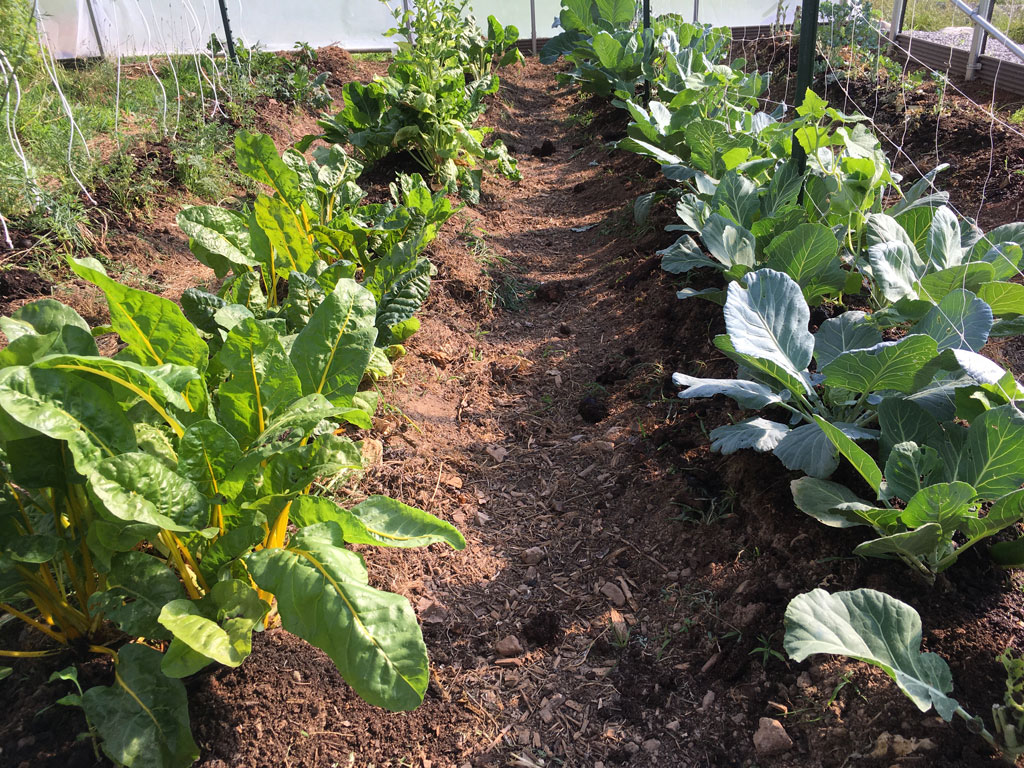
The high tunnel quickly became my favorite place to grow! All through winter, we’ve enjoyed kale, collards, lettuce, and more. Aside from that one time when I got locked in, it’s a keeper!

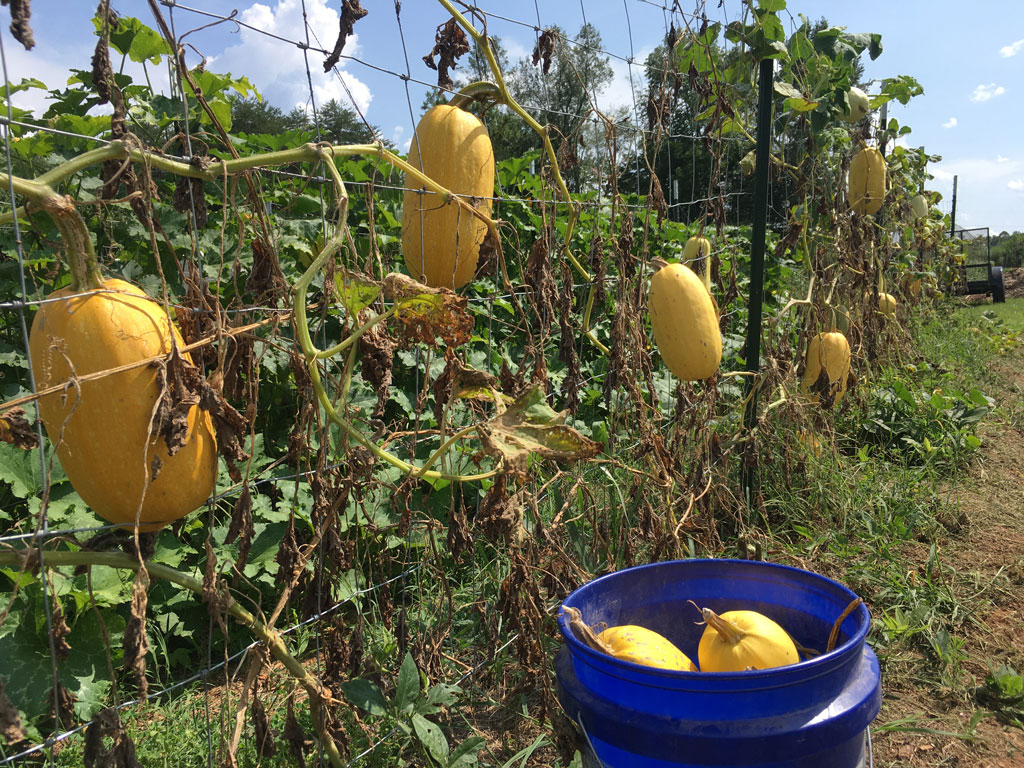
Winter Squash — Spaghetti
| Scientific Name | Cucurbita pepo |
| Growing Days | 90 |
| Varieties We Grow | It’s just “Spaghetti” |
| Growing Notes | Spaghetti squash does great on a trellis (as long as it is a strong one). Give it lots of room to grow! |
| Battle of the Bugs | The squash bugs, squash vine borers, and cucumber beetles have destroyed our crop for two years in a row. They are relentless. |
| Fun Fact | The fun part of spaghetti squash is that when you use a fork to scrape it out of the skin, it really does look like spaghetti! |
| Don’t Waste It! | Bake it or roast it. Don’t forget to roast the seeds too! |
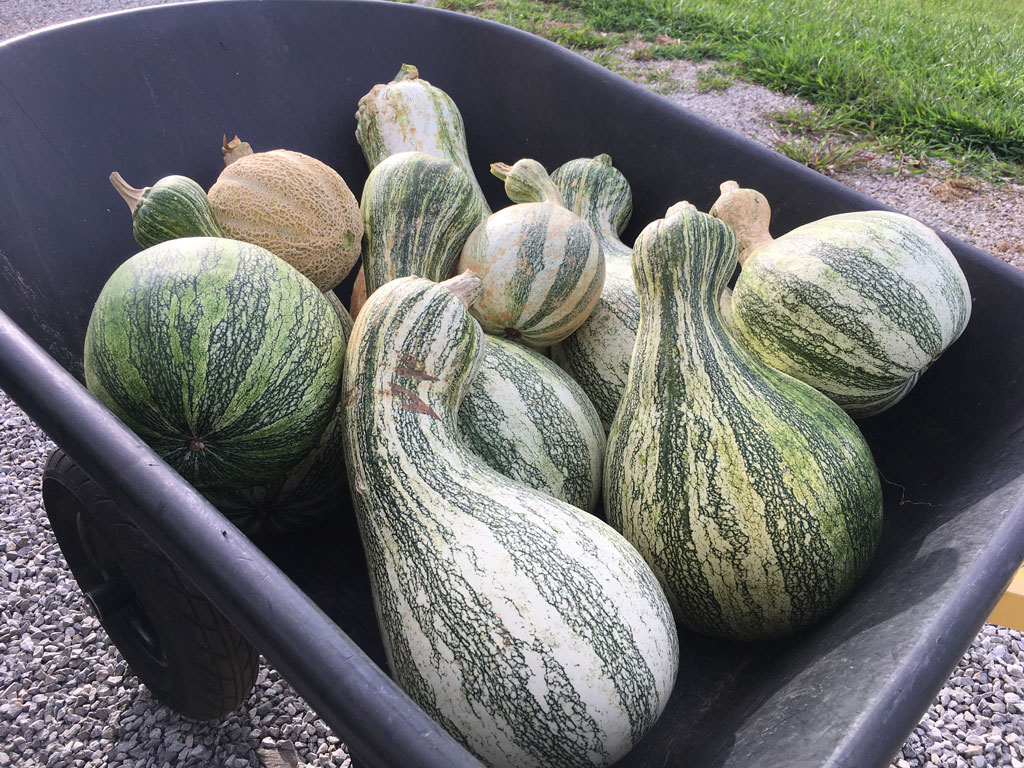
Winter Squash — Green Striped Cushaw
| Scientific Name | Cucurbita argyrosperma |
| Growing Days | 115 |
| Varieties We Grow | Green Striped Cushaw |
| Growing Notes | This cushaw squash gets big. Give it lots and lots of room to grow! Put something under the squash to keep it from rotting on the ground. |
| Battle of the Bugs | This type of squash is resistant to the squash vine borer, so it’s much hardier than most squash plants. |
| Fun Fact | This squash can get over 20 pounds! |
| Don’t Waste It! | Bake it or roast it. Use it as a pumpkin pie alternative. Don’t forget to roast the seeds too! |
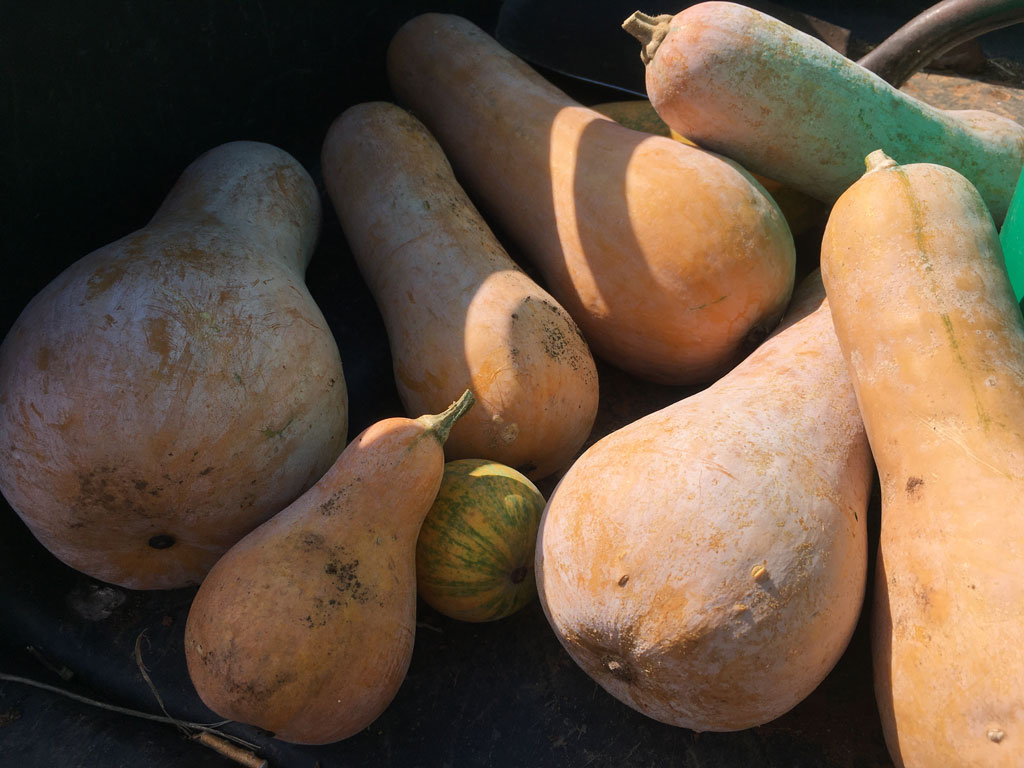
Winter Squash — Butternut
| Scientific Name | Cucurbita moschata |
| Growing Days | 100-110 |
| Varieties We Grow | Waltham; Orange |
| Growing Notes | Butternut squash does great on a trellis as well as along the ground. Give it lots of room to spread! |
| Battle of the Bugs | Butternut squash is resistant to squash vine borers so that makes it one of the hardier squashes. Squash bugs do take their toll though. |
| Fun Fact | Butternut squash was developed at the Waltham Experiment Station in Massachusetts, which was is the oldest agricultural experiment station in the United States (est. 1871). |
| Don’t Waste It! | Enjoy it roasted, steamed, mashed, or pureed. Don’t forget to roast the seeds too! |
Winter Squash — Acorn
| Scientific Name | Cucurbita pepo |
| Growing Days | 90 |
| Varieties We Grow | Ebony |
| Growing Notes | Trellising acorn squash works great to get them off the ground. Off the ground they don’t get the telltale orange colored spot though indicating it’s time to harvest. |
| Battle of the Bugs | Squash bugs, squash vine borer, cucumber beetles…they all do a number on squash plants. |
| Fun Fact | September 7th is National Acorn Squash day. Interesting, but…why??? |
| Don’t Waste It! | Bake it, roast it, steam it. Don’t ditch the seeds…roast those too! |
Turnips
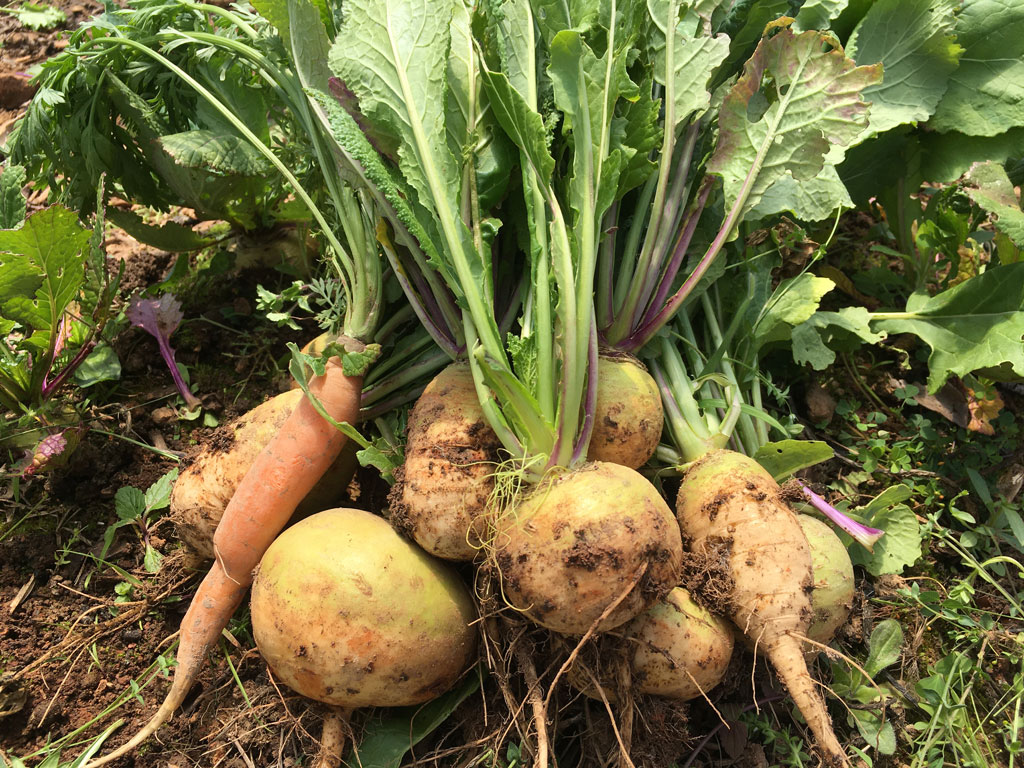
| Scientific Name | Brassica rapa |
| Growing Days | 60-70 |
| Varieties We Grow | Boule D’Or, Purple Top White Globe |
| Growing Notes | Turnips like it cool and will bolt when the temperature hits 80 degrees. Direct seed them early in the spring and hope you don’t get an early warm spell! Fall sowing is probably more reliable in the South. |
| Battle of the Bugs | Aphids, flea beetles, stink bugs, snails, and slugs all take a bite. |
| Fun Fact | Apparently, the Romans liked to hurl turnips at unpopular public figures (don’t take my word for it though…I wasn’t there). |
| Don’t Waste It! | Turnips can be eaten raw, baked, boiled, roasted, or mashed. Don’t forget the greens! |
Tomatoes
| Scientific Name | Solanum lycopersicum |
| Growing Days | 60-100 |
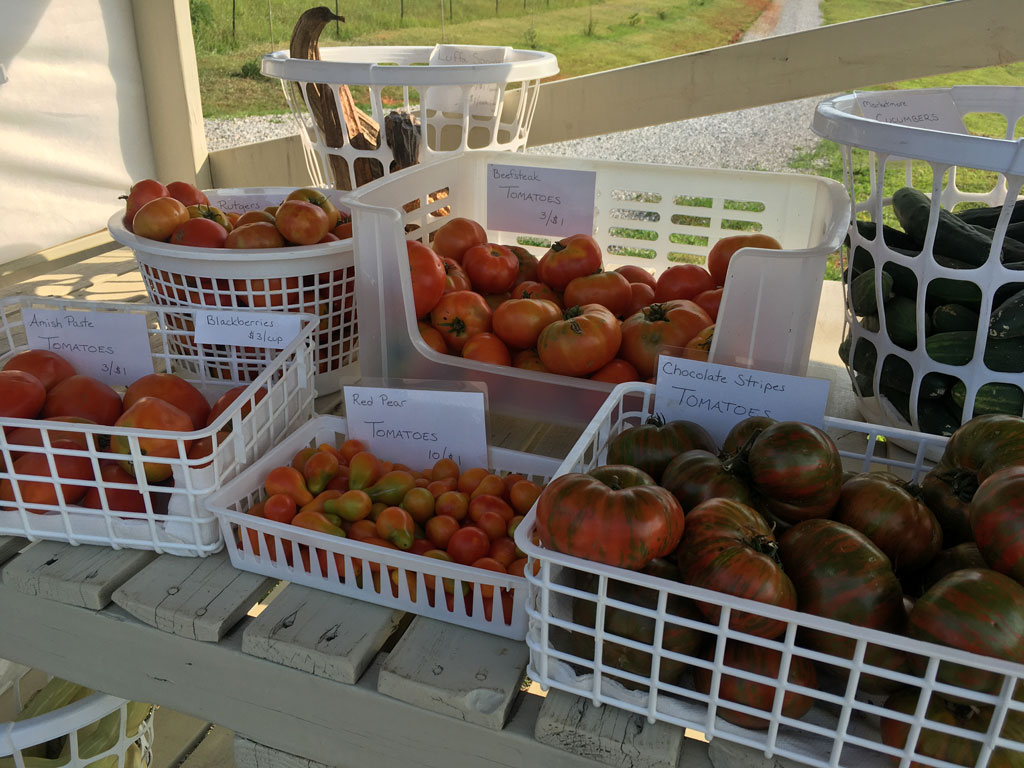
| Varieties We Grow | Amish Paste, Beefsteak, Cherokee Purple, Cherry Belle, Rutgers, others… |
| Growing Notes | Tomatoes take a lot of maintenance to grow. They require trellising and manually training them up the trellis; leaves should be pruned; nutrition and irrigation need to be consistent; plants are really prone to blight and other diseases – it’s not a matter of “if” but “when” they’ll get it. |
| Battle of the Bugs | Tomato and tobacco hornworms are troublesome, but the worst bugs we’ve faced with our tomato plants so far are the army worms. They destroy fruits quite efficiently. |
| Fun Fact | Some people are allergic to tomato plants and get a contact dermatitis (or worse) reaction after touching the leaves. Bummer! |
| Don’t Waste It! | If you love tomatoes, you already know how best to enjoy them 🙂 |
Swiss Chard
| Scientific Name | Beta vulgaris |
| Growing Days | 60 |
| Varieties We Grow | Oriole, Rainbow, Perpetual Spinach |
| Growing Notes | Swiss chard will keep producing if you harvest the outer leaves and let the inner ones grow; it doesn’t bolt like other greens so it’s a keeper! |
| Battle of the Bugs | Snails, slugs, aphids, and leaf miners will take their share but that won’t usually kill the entire plant, so that’s a plus. |
| Fun Fact | Swiss chard is related to beets…not kale or collards. |
| Don’t Waste It! | Eat the greens like you would spinach (raw or cooked); save the stems and treat them like asparagus! |